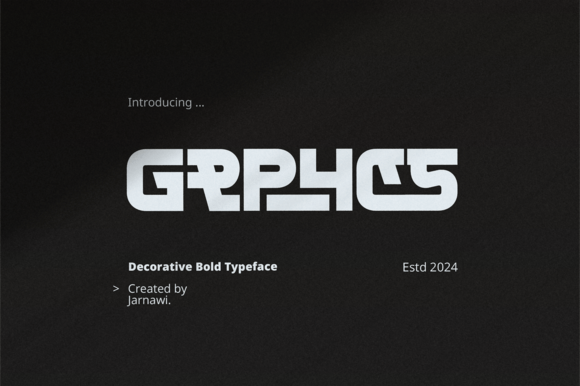
Grphcs: A Bold Display Font for Web Design
As a web designer, the right typeface can transform a layout from generic to unforgettable. Grphcs is one such display font that brings urban energy and modern flair to digital projects. Its edgy aesthetic makes it ideal for creating visual impact without sacrificing readability in key areas of a website.
Understanding Grphcs’ Visual Style
Grphcs is a distinctive typeface with sharp angles, thick strokes, and a confident rhythm that speaks to a bold personality. It’s not just about looking good—it's about making a statement. The design carries a strong visual weight that works well for headlines, logos, and other high-impact elements where you want to grab attention immediately.
This font blends modern typography with an urban edge, making it versatile for creative industries like branding, advertising, and editorial design. Its structure ensures legibility even at smaller sizes, which is crucial when using it for section headings or call-to-action buttons.
Where Grphcs Shines in Web Design
Grphcs excels as a display font for hero sections, landing page headers, and online store banners. Its strong presence makes it perfect for brand-focused content where you want to convey confidence and authority. Consider using it for:
- Website headers and main titles
- Landing page CTAs and promotional banners
- Blog headers and featured article titles
- Product showcase sections on e-commerce sites
- Portfolio site intros and project highlights
- Social media graphics and ad creatives
Its versatility extends to both light and dark backgrounds, though careful contrast is needed to maintain readability. For instance, using Grphcs on a dark background with a white or light gray color can enhance its visibility while preserving its bold character.
Readability and Visual Hierarchy
A common challenge with display fonts is ensuring they remain readable across different screen sizes. Grphcs performs well on mobile screens when used appropriately—especially for short phrases and titles. Avoid using it for long blocks of text, but use it strategically for emphasis.
When designing layouts, think about how Grphcs interacts with other elements. Pairing it with a clean sans serif font like Helvetica or Arial for body copy creates a balanced hierarchy. This approach keeps your content scannable while maintaining a strong visual identity.
For example, on a coaching website, using Grphcs for the headline “Transform Your Life Today” paired with a simple sans serif font for the supporting text helps guide the user’s eye naturally through the content.
Brand Tone and Professionalism
The choice of font significantly affects how a brand is perceived. Grphcs conveys a sense of strength, creativity, and modernity. It’s particularly effective for brands targeting younger audiences or those in the creative industry, such as designers, artists, or tech startups.
Using Grphcs consistently across your website—from logo text to hero sections—helps build a cohesive brand identity. It reinforces a professional yet dynamic tone that resonates with users who value innovation and style.
However, it’s important to ensure that Grphcs aligns with your overall brand voice. If your brand is more traditional or corporate, this font might be better used sparingly or in combination with more neutral fonts.
Practical Tips for Using Grphcs
Before implementing Grphcs into your design, check what styles and weights are included. Many display fonts offer variations that allow for subtle tonal shifts. Also, confirm whether the font supports multilingual characters if your audience spans multiple regions.
When using Grphcs for buttons or small interactive elements, ensure there’s enough padding and spacing around the text to prevent visual clutter. On responsive designs, test how the font behaves at various breakpoints to avoid unexpected scaling issues.
Finally, remember to obtain the correct commercial license for any web project that uses Grphcs. Whether you're building a client website, launching an online store, or developing a digital product, proper licensing ensures legal compliance and protects your work.
By thoughtfully integrating Grphcs into your design system, you can elevate your web projects with a unique and powerful visual language that stands out in today’s competitive digital landscape.